Overtreatment Studies in Dentistry: Why Unnecessary Fillings Happen
Oct 13, 2026
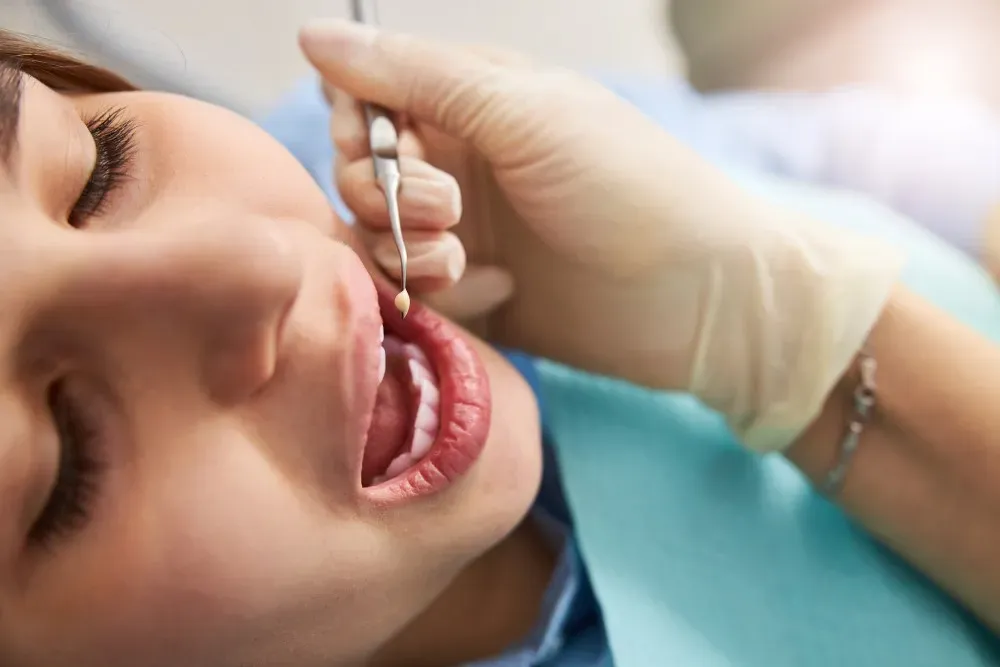
When you’re told you need a dental filling, it’s natural to assume the diagnosis is accurate. However, dental care is rarely black and white, and different dentists often recommend completely different approaches for the exact same tooth.
At 2nd Opinion Dental in Hellertown, Pennsylvania, Jason Tosto, DMD, focuses on providing independent evaluations to help you understand your options. Whether you need a dental diagnostic appointment or you have questions about fillings, understanding why treatment recommendations vary can empower you to make the best decisions for your oral health.
The clinical threshold for when a tooth needs a filling is a subject of ongoing professional debate. Historically, dentists were trained to aggressively drill away all decayed tissue. Today, the standard has shifted toward preserving as much of the natural tooth as possible.
According to the American Dental Association, the preferred clinical approach for moderate and advanced cavities in permanent teeth is selective carious (decayed) tissue removal. This conservative protocol involves leaving some affected dentin (dental tissue between the enamel and the pulp) to protect the pulp (nerve). Sealing a restoration over this dentin traps and encases the remaining bacteria, denying them nutrients and stopping the decay.
However, many practitioners still rely on older, more aggressive drilling methods. A cross-sectional questionnaire study of 500 US dentists published in the Journal of the American Dental Association found that only 62.4% of respondents chose selective caries removal 50% or more of the time for asymptomatic deep decay.
This means that one dentist may recommend a conservative approach while another may suggest a much larger filling, depending on variabilities in their training.
Dental diagnoses are highly dependent on subjective human interpretation. Dentists must evaluate two-dimensional X-rays and use metal instruments to feel the complex anatomy of your teeth. Because these diagnostic tools are imperfect, professional disagreement is common.
A national cross-sectional study of 627 US dentists published in BMC Oral Health reported that 40% of respondents observed a diagnostic error made by another dentist on a daily or weekly basis. Only 12.4% of those surveyed admitted to personally making an error with that same frequency.
While patients often worry about overtreatment, underdiagnosis is a much larger statistical risk. The same BMC Oral Health study found that missed diagnoses accounted for 78.6% of all diagnostic malpractice claims.
A dentist recommending a “watch-and-wait” approach must balance avoiding an unnecessary filling with the risk of letting active decay progress.
A common source of unnecessary dental work is the premature replacement of existing fillings. Many patients assume that silver or tooth-colored fillings naturally expire and must be swapped out after a certain number of years.
However, the American Dental Association advises against replacing intact fillings just because they’re old. Every time a filling is drilled out, healthy surrounding tooth structure is lost, which weakens the tooth and risks traumatizing the underlying pulp.
Unless your existing filling is cracked, actively leaking, or has new decay developing underneath it, leaving it alone is generally the safest choice.
At 2nd Opinion Dental, we believe in giving you the unbiased information you need to make confident decisions about your oral health. Dr. Tosto doesn’t perform the treatments he recommends, which means his evaluations are entirely focused on what’s best for you.
If you want a neutral and unbiased perspective on recommended dental treatment that you’re not sure is necessary, schedule a consultation today.